Mix it up with the cash combo spending plan
Last time I talked about the all-cash spending plan and the pluses and minuses with it. The most obvious minus is that paying bills in cash often incurs extra charges and is a giant faff.
Introducing the cash combo plan. All the convenience of electronic payments, just as tangible and intuitive as the all-cash plan.
Here’s how it works. You set up automated payments for all your bills, savings, insurances, and credit repayments. Make sure there’s enough in your current account to cover these each week/month, plus a little bit of extra, in case any of the bills is higher than expected. Then you withdraw the money for your spending including both essentials like groceries and more fun things like renting a movie.
You can treat the cash like you do for the all-cash plan, sorting it into envelopes for different types of expenses.
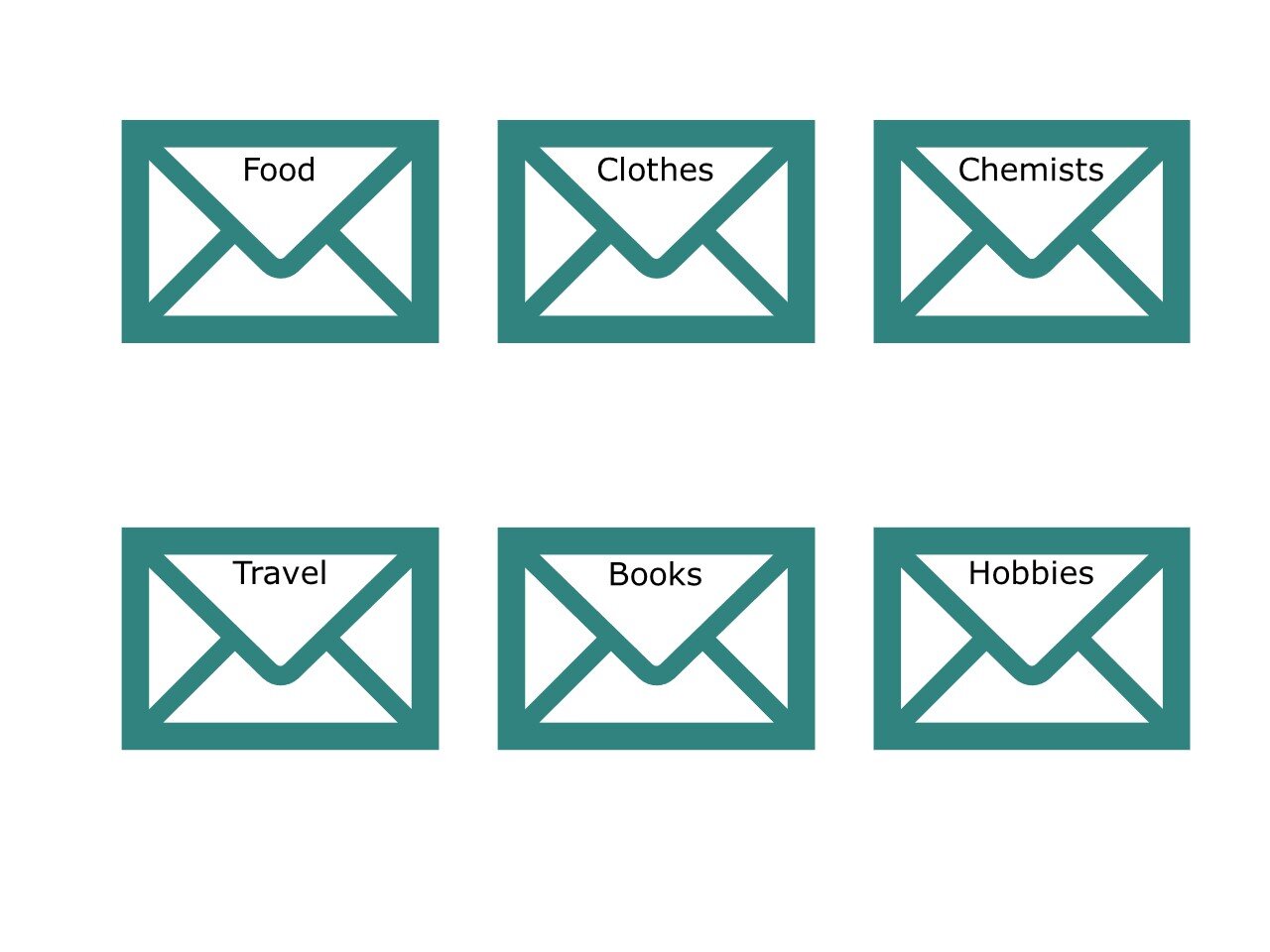
You’ll probably need more envelopes than this, especially if you have children.
Alternatively you can just have two envelopes, one for “essentials” and one for “non-essentials”. The key is to be over-generous with the “essential” envelope and not take money out of it, except for your those essential expenses, until you get to the end of the week/month. The one downside with doing things this way is you’ll know less about where your money is going than with the “types of expense” version.

Two nice, big, fat envelopes. More simplicity, less control.
At the end of the week/month if there’s still money in the “essential” envelope, you can decide whether to put it back into a savings/investment account or to treat yourself.
One thing to bear in mind is that because bills are easier to manage on a month by month basis but spending is easier to manage on a week by week basis, you may also choose to withdraw your spending cash weekly or to withdraw for the month, but have weekly envelopes.

You do know only February has four weeks, right?
So, what do you think? Would you find the cash combo spending plan useful?
For more on different ways to create a spending plan listen to my podcast, Squanderlust.
Going old school with your grandma's spending plan
Our first way to craft a spending plan (or budget, if you must) is the most low-tech way imaginable. This is a method that people used for centuries. Before there were debit cards and challenger banks and smartphone apps there was the all-cash spending plan. Your grandma or great grandma may well have used a system like this and with good reason. It’s simple and it works.
This way of planning spending has a few other names. People also call it the cash diet and, for reasons that will become apparent, the jam jar method or the envelope method.
Here’s how it works.
Take all your money for bills and spending for the week or month out of your account. Transfer the money you’re putting aside for future savings and investments into the relevant accounts.
Label a set of containers with the expenses you have to pay (fuel, water, food, clothes, children’s activities etc). Envelopes or jam jars are the classics, but a set of ziplock bags will work, or the zip-up pockets in a personal organiser.
Share your money out between the containers. Start with the most important bills i.e. housing costs, fuel, TV licence, council tax, and work down. Only spend from the correct containers, try not to swap money between them. Do not take money out of the containers for covering bills to pay for other costs. Have one container for emergencies and add to it each month. Wanting a bottle of wine is not an emergency.
Pros and Cons
This is a straightforward system and it can’t be fudged. The money is either in a container or it isn’t. This makes it a very tangible, intuitive system for people who struggle with focusing on the numbers on a screen or connecting them to their real life purchases. If your maths is a bit iffy, this requires much less calculation than other systems. You just share out the cash until everything is covered.
It’s also great if you have had a tendency to tell yourself it’s ok to overspend because you’ll “make it up later… somehow”. It makes it very clear there is no making it up “somehow”. The only way to make it up is to cut down spending on something else.
Of course, there are downsides. Most of us don’t want to pay all our bills in cash, even if we have the option. Automated billing saves a lot of time and effort and as long as the money’s there, you know your payment won’t be late and affect your credit score. Moreover, there are obvious security risks to keeping lots of cash in your home and most of us want to avoid those.
We’re moving to a cashless society and some shop assistants will look at you sideways if you pay cash, especially for bigger ticket items. They may think you’re involved in some kind of shady activity and trying to launder the money (although, for real, no one launders money that way, not efficient enough for the sums involved).
Depending on where you live there may not be a cash machine local to you, so making the weekly/monthly withdrawal may take planning. No one wants to spend extra on travel just to get their money if they can help it.
Still this is a solid way to plan weekly or monthly expenses for anyone who wants to get a really tight rein on their spending.
What do you think? Is this something you would ever try?
To hear more about different ways to plan and track spending, check out my podcast Squanderlust Episode 7 : Budget Pick ‘n’ Mix